On 16 September 2026, the MODI delegation participated actively in the Autonomous Summit at the Port of Antwerp-Bruges, bringing four years of research, demonstrations and practical experience to a wider audience of logistics and mobility professionals.
Following the MODI Final Event the previous day, the Summit provided an opportunity to share the project’s results with organisations exploring how automation can support their operations. Building on the strong relationship between MODI and the Port of Antwerp-Bruges, the consortium saw the event as an ideal setting to connect its findings with the needs of the logistics community and encourage their use beyond the project.
MODI’s participation combined three complementary activities: a static demonstration area, a dedicated exhibition pavilion and two Main Stage sessions. Together, these enabled visitors to explore the vehicles used in the project, meet the teams behind the demonstrations and discuss the conditions required to bring automated freight into everyday logistics.
Exploring MODI’s Vehicles and Demonstrations
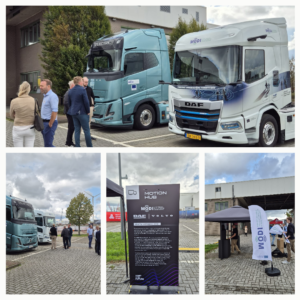
The outdoor static demonstration area featured DAF and Volvo trucks used in the MODI project, giving Summit participants a close-up view of the vehicles behind the research and demonstrations.
Members of the MODI team remained available throughout the event to explain the vehicles’ role in the project, answer questions and discuss the experience gained from testing automated freight in different operational environments. This direct exchange allowed visitors to connect the technology on display with practical questions about safety, infrastructure, operational requirements and integration into existing logistics processes.
Videos complemented the static display, showing demonstrations involving DAF, Volvo and Einride across MODI’s use cases. They brought the pilot environments to the Summit, illustrating how automated vehicles interact with terminals, logistics hubs, public roads and supporting services.
The combination of vehicles, demonstration footage and explanations from project staff helped make MODI’s results accessible to an audience with different levels of familiarity with CCAM. It also provided an opportunity to discuss both the capabilities demonstrated and the conditions that must be addressed as automated freight operations expand.
A Dedicated Pavilion Connecting MODI with the Logistics Community
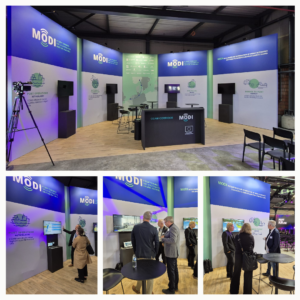
Inside the exhibition area, the MODI pavilion brought together the project’s four national use cases: port operations in the Netherlands, motorway-to-harbour operations in Germany, hub-to-hub transport in Sweden, and border-to-port operations in Norway. The wider Rotterdam–Oslo CCAM corridor provided the connection between these different logistics environments.
Use case leaders and MODI staff welcomed visitors, presented the demonstrations and explained the findings generated through the project. Dedicated displays and videos gave participants an overview of each use case, while direct conversations offered space to explore particular operational challenges and deployment requirements in greater detail.
For logistics professionals, the pavilion provided a way to relate MODI’s work to their own activities. Discussions connected vehicle automation with terminal processes, loading and unloading, connectivity, infrastructure readiness and coordination across the logistics chain. The variety of use cases helped illustrate how requirements differ between operational settings, while also revealing common challenges that future deployments will need to address.
The pavilion also supported networking and the exploration of potential synergies. By bringing the teams responsible for the demonstrations into direct contact with prospective users and other stakeholders, MODI encouraged further exchange on how its results, recommendations and technical knowledge could support future CCAM initiatives and logistics operations.
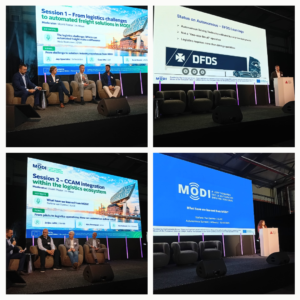
Two Main Stage Sessions on the Future of Automated Logistics
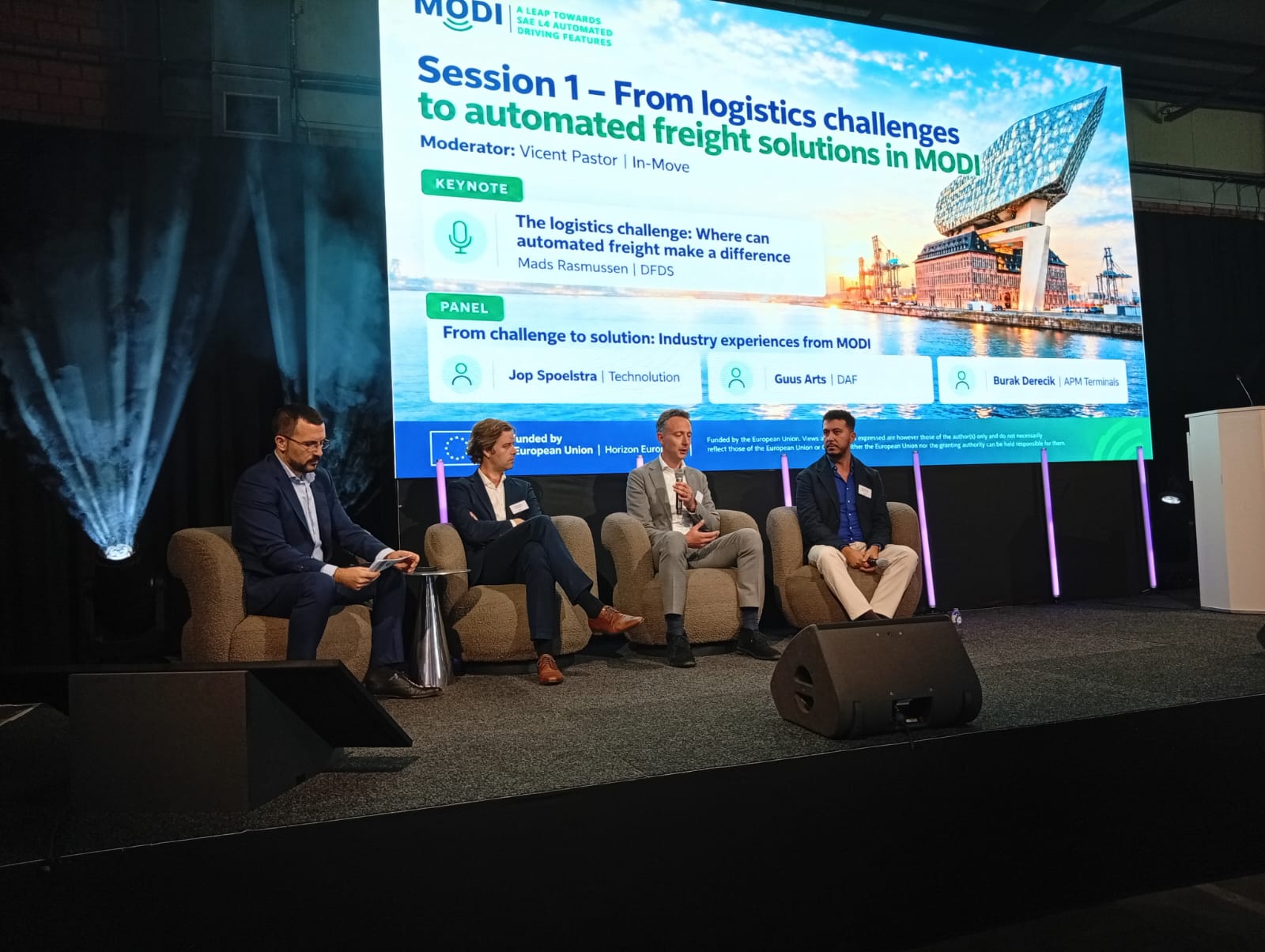
MODI also contributed to the Summit’s conference programme through two dedicated Main Stage sessions that brought the project’s findings to hundreds of participants. Both sessions featured an introduction and moderation by Vicent Pastor of IN-MOVE, combining a keynote presentation with a panel discussion.
Session 1: “From logistics challenges to automated freight solutions in MODI”
The first session opened with the keynote “The logistics challenge: Where can automated freight make a difference?”, delivered by Mads Rasmussen of DFDS. It established the logistics perspective for the discussion, considering where automation can respond to operational needs and why successful implementation requires attention to the activities surrounding the driving task.
A MODI demonstration video then connected these challenges with the project’s work on L4 automated freight in real logistics environments.
The panel “From challenge to solution: Industry experiences from MODI” brought together Jop Spoelstra of Technolution, Guus Arts of DAF and Burak Derecik of APM Terminals. Their complementary perspectives connected system integration, vehicle development and terminal operations, giving the audience an opportunity to explore the project’s experience across the organisations involved in making automated freight work.
The session linked the technologies demonstrated in MODI with the operational interfaces and cooperation required to integrate them into logistics services.
Session 2: “CCAM integration within the logistics ecosystem”
The second session opened with Stefanie van Damme of ALICE, whose keynote “What have we learned from MODI?” introduced the project’s lessons and their relevance for the wider logistics community.
The following panel, “From pilots to logistics operations: How can automation deliver value?”, featured Zeljko Jeftic of Einride, Mats Rosenquist of Volvo and Bob Dodemont of the Port of Rotterdam. The discussion brought together automated transport, vehicle industry and port perspectives to examine the transition from demonstrations towards operational use.
This second session placed the focus on integration and value creation: how automated freight can fit within the logistics ecosystem, what different stakeholders need from one another, and how the experience gained through MODI can support the next steps.
Together, the two sessions connected the challenges facing logistics operators with the project’s technical and operational findings, extending the discussion from individual vehicles to the wider conditions for deployment.
Carrying MODI’s Experience into Future Deployment
The Autonomous Summit was one of MODI’s final major dissemination activities during its implementation period. Its combination of demonstrations, exhibition exchanges and conference discussions enabled the consortium to share its achievements with a broad professional audience and strengthen connections for the continued use of its results.
The knowledge developed through MODI will remain with the organisations that designed, tested and assessed its solutions. Partners will carry this experience into their research, industrial development and operational activities, while continuing to present and share the findings through future projects, events and European initiatives.
This experience is particularly relevant to the next generation of large-scale CCAM demonstrations and cross-border testbeds, as well as deployment discussions involving the European Connected and Autonomous Vehicle Alliance (ECAVA). MODI’s work on logistics integration, infrastructure readiness, validation and interoperability provides evidence that can inform these efforts and help future initiatives build on the lessons already learned.
The consortium is also completing the consolidation of its public resources. The MODI Library will serve as the main access point for the project’s results, including videos, presentations, publications, public deliverables and other practical materials. The website will remain available for at least three years after the project’s completion, complemented by access through CORDIS and relevant open-access repositories, allowing the CCAM and logistics communities to continue benefiting from its work.
Throughout October, the MODI Results article series will highlight these resources and their relevance for different users. This includes the MOOC on Autonomous Vehicles in Logistics, now available through HZ University of Applied Sciences, alongside demonstration videos and further project findings.
MODI leaves the community with evidence of what automated freight can achieve, a clearer understanding of the conditions it requires, and recommendations for taking the next steps. Carrying this knowledge into future demonstrations, testbeds and logistics operations will ensure that the work of the consortium continues to contribute to European CCAM deployment.
Explore MODI’s results through the MODI Library, discover the free MOOC on Autonomous Vehicles in Logistics, and follow our upcoming articles as we share the project’s final outcomes with the community.