
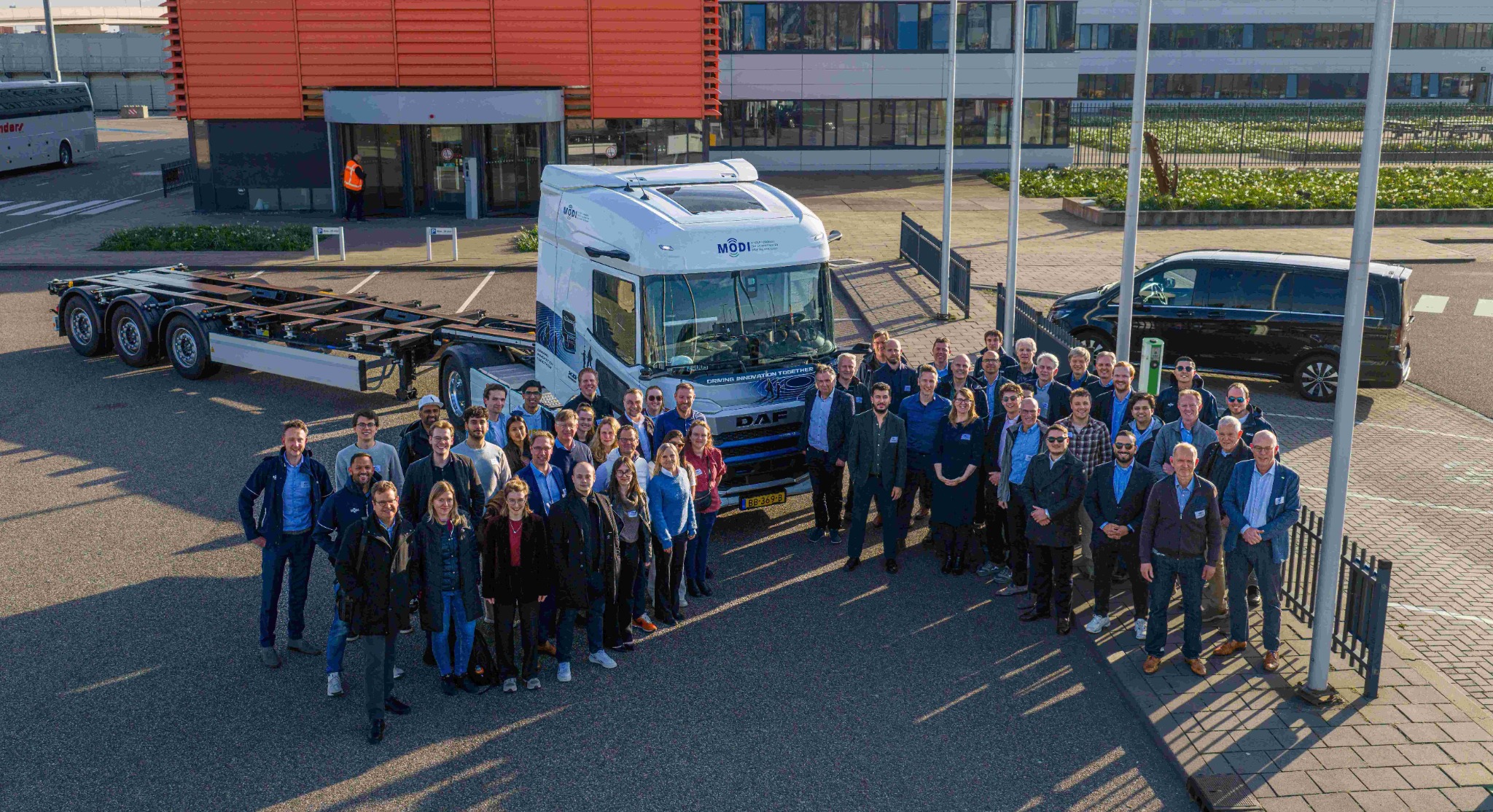
On 14–15 April 2026, stakeholders from across the logistics, mobility, port and innovation ecosystems gathered in Rotterdam for the MODI Use Case Netherlands Public Event, hosted by TNO, leader of the MODI Netherlands use case.
The event marked the culmination of several years of research, testing and demonstration activities focused on the deployment of Connected, Cooperative and Automated Mobility (CCAM) solutions in one of Europe’s most complex logistics environments. Bringing together project partners, infrastructure managers, terminal operators, vehicle manufacturers, technology providers, public authorities and logistics stakeholders, the event provided a unique opportunity to share lessons learned from the Netherlands demonstrations and discuss the future deployment of automated freight transport in port operations and drayage.
As one of MODI’s flagship demonstration environments, the Netherlands use case has focused on understanding how automated freight vehicles can operate safely and efficiently within highly demanding logistics settings while interacting with physical and digital infrastructure, traffic management systems, terminal operations and wider supply chain processes. The demonstrations conducted in and around the Port of Rotterdam have enabled project partners to explore the integration of vehicle automation with connectivity services, cooperative infrastructure and operational logistics requirements.
The two-day programme combined strategic discussions, technical presentations and live demonstrations, providing participants with a comprehensive overview of the progress achieved within the Netherlands use case and its contribution to the broader MODI project.
Following the welcome session, TNO, as leader of the Netherlands use case, introduced the objectives, scope and development of the demonstrations carried out in Rotterdam. The presentation highlighted how the use case focuses on integrating Connected, Cooperative and Automated Mobility (CCAM) solutions into port operations and drayage activities, while validating the interaction between automated vehicles, logistics processes and physical and digital infrastructure.
Building on this introduction, ITS Norway, coordinator of the MODI project, presented the wider project perspective, outlining how the Netherlands demonstrations contribute to MODI’s ambition of accelerating the deployment of automated freight transport across European logistics corridors. Participants were provided with an overview of the project’s demonstration activities, key achievements and the role of the Dutch use case within the broader portfolio of MODI pilot operations.
The technical programme then explored the architecture and enabling technologies supporting the demonstrations. TNO presented the coordination interface developed within the project and its role in facilitating interactions between vehicles, infrastructure and operational systems. This was followed by contributions from Technolution and Q-Free, which showcased Cooperative Intelligent Transport Systems (C-ITS) solutions and connectivity services supporting vehicle-to-infrastructure communication and information exchange in operational environments.
Researchers from Eindhoven University of Technology subsequently presented their work on localisation, mapping and low-level path planning, highlighting the importance of accurate positioning and vehicle guidance for automated freight transport applications. The integration of automated driving technologies was further explored by DAF Trucks, which shared insights into automated driving system development, verification and validation activities carried out within the project. Complementing these perspectives, Rijkswaterstaat presented the role of road infrastructure authorities in supporting future automated drayage operations and discussed how infrastructure services can contribute to safer and more efficient freight transport.
A key highlight of the first day was the visit to APM Terminals Maasvlakte, where participants experienced the operational environment in which the Netherlands use case demonstrations have been conducted. Through guided visits and technical explanations, stakeholders gained first-hand insights into the challenges and opportunities associated with integrating automated freight vehicles into terminal operations and port logistics processes.
The second day focused on deployment pathways, exploitation opportunities and the long-term impact of the project’s findings. ALICE – the Alliance for Logistics Innovation through Collaboration in Europe – presented perspectives on how lessons learned from MODI can contribute to future large-scale freight automation initiatives and support the transition from pilot projects towards wider deployment across Europe.
This was followed by presentations from APM Terminals and Maersk, which shared operational experiences and lessons learned from automated driving activities in port environments and drayage operations. These sessions provided valuable insights into the practical challenges of integrating automated freight vehicles into existing logistics processes and highlighted the importance of cooperation between technology providers, terminal operators and logistics companies.
Further reflections on the integration of CCAM technologies into logistics operations were presented by TNO and project partners, including discussions on operational requirements, deployment barriers and the first recommendations emerging from the Netherlands use case. The sessions demonstrated how the project is contributing to a better understanding of the technological, organisational and regulatory conditions required to enable future automated freight transport services.
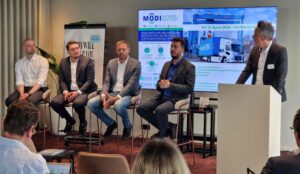
The public event concluded with the panel discussion “From Recommendations to Realisation: What Needs to Be Done?”, moderated by CCAM Cluster. Bringing together representatives from industry, research organisations, infrastructure managers and logistics stakeholders, the debate focused on how the findings generated through MODI can support future deployment activities, the role of physical and digital infrastructure in enabling automation, and the actions required to accelerate the adoption of automated freight transport solutions across Europe. The discussion highlighted the importance of translating lessons learned and recommendations from pilot activities into practical implementation pathways, while ensuring close cooperation across the entire logistics ecosystem. Participants agreed that collaboration between public authorities, infrastructure operators, technology providers, vehicle manufacturers and logistics companies will be essential to bridge the gap between successful demonstrations and large-scale deployment.
🚛 Demonstrating CCAM and Automated Freight Transport in Rotterdam
A central element of the public event was the opportunity to experience the Netherlands use case demonstrations in a real operational environment. Participants visited APM Terminals Maasvlakte, where project partners showcased how Connected, Cooperative and Automated Mobility technologies can support freight transport operations within one of Europe’s busiest logistics hubs.
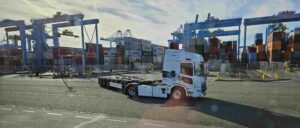
The demonstrations focused on automated drayage operations and the interaction between automated vehicles, terminal infrastructure and logistics processes. Participants observed how the MODI demonstration vehicle navigates complex operational environments while interacting with infrastructure services, terminal operations and surrounding traffic conditions.
The demonstrations also highlighted the importance of physical and digital infrastructure in enabling automated freight transport. Throughout the project, partners have been working on the design and validation of interfaces between automated vehicles and infrastructure systems, enabling the exchange of information required to support safe and efficient operations. These activities represent one of the key contributions of the Netherlands use case to the wider CCAM ecosystem.
The demonstrations provided valuable insights into how automated freight transport solutions can be integrated into real logistics operations and helped stakeholders better understand both the opportunities and challenges associated with future deployment in port environments.
🌍 Looking Ahead
The Netherlands use case has generated valuable insights into the deployment of Connected, Cooperative and Automated Mobility solutions in logistics operations, particularly regarding the interaction between automated vehicles and physical and digital infrastructure. By combining real-world demonstrations with stakeholder engagement and cross-sector collaboration, the project has contributed to advancing the understanding of how automated freight transport can be integrated into complex logistics environments.
Beyond the demonstrations themselves, the findings generated through the Netherlands use case are expected to contribute to future large-scale European CCAM initiatives and deployment activities. The lessons learned from port operations, drayage activities and infrastructure integration provide important building blocks for accelerating the adoption of automated freight transport solutions and supporting the transition towards safer, more efficient and more sustainable logistics systems across Europe.
🎬 Don’t miss MODI promotional video on YouTube and also available on MODI’s official website.
📢 Stay tuned for further updates on our ongoing initiatives as the MODI consortium continues to expand global partnerships and drive innovation in the CCAM arena. For more information about the project and its developments, please join our Newsletter, and keep following MODI on LinkedIn and X (Twitter).